



“Tamriyeh”… A Traditional Sweet Reviving Its Presence in Homs’ Markets During Ramadan
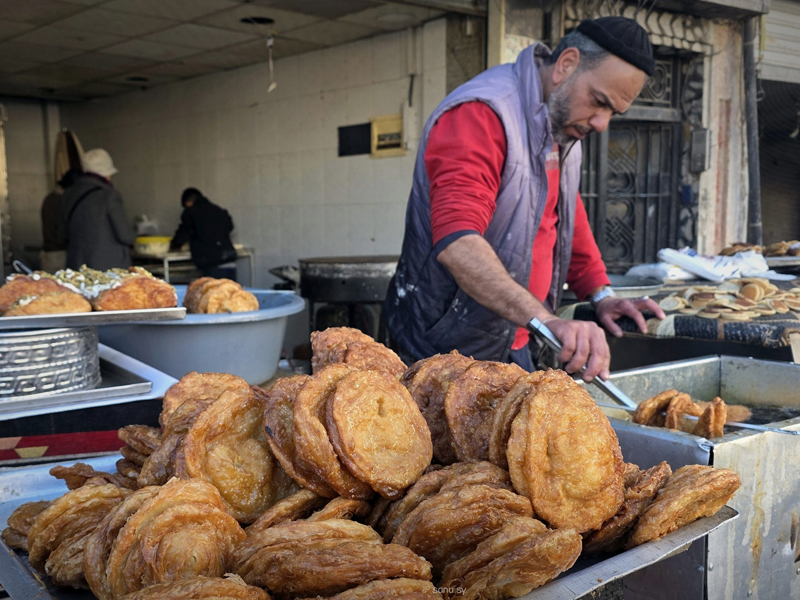
During the holy month of Ramadan,
the traditional Tamriyeh of Homs makes a strong comeback in the
city’s markets, drawing residents who consider it one of the most iconic local
sweets tied to the city’s memory and Ramadan rituals. Sweet makers prepare it
in front of customers, adding a lively and nostalgic atmosphere to the bustling
streets.
A Sweet with Over a Century of Heritage
In one of the old confectionery
shops in the market, shop owner Riyad Kaada explains that Tamriyeh holds a
special flavor associated with Ramadan, and locals eagerly await it every year.
He notes that this sweet has been part of Homs’ heritage for more than a
hundred years, originally prepared in homes before moving to shops while
preserving its authentic, inherited method.
A Delicate Preparation Process for a Distinctive Taste
Preparation begins a day in
advance by mixing flour, water, and butter to create a thin, carefully
stretched dough. The dough is then quickly fried in hot oil until it turns
golden, before being dipped in syrup to achieve its signature sweetness.
Tamriyeh is sold in three varieties to suit different preferences: filled with
cream, filled with dates, or plain, all offered at affordable
prices.
A Taste of Memory and Belonging
Nada Hamdan, a resident who
recently returned to Homs after years abroad, says she decided to try Tamriyeh
for the first time this year because of its connection to family and city
memories during Ramadan. She adds that watching it being prepared in front of
customers gives it a special charm. Mohammad Al‑Zwein, a frequent visitor to
the traditional sweets market, describes Tamriyeh as a beloved part of Homs’
heritage enjoyed by both young and old, and appreciated for its reasonable
price.
A Sweet That Preserves Its Place Despite Changing Trends
Despite the emergence of many
modern desserts, Tamriyeh continues to hold a firm place in the collective
memory of Homs’ residents, adding a distinctive Ramadan flavor to the city’s
markets and remaining a symbol of its culinary and cultural heritage.

Leave a Reply
Your email address will not be published. Required fields are marked *
Search
Category